
Have you ever felt completely overwhelmed by emotion—so much so that your body feels like it’s in overdrive? Maybe your heart races, your thoughts spiral, and it seems impossible to calm yourself down. In moments like these, we need fast, effective tools. One surprisingly simple but powerful method comes straight from Dialectical Behavior Therapy (DBT): cold water immersion.
Yes, cold water—something as accessible as your sink, a bag of ice, or even your freezer—can activate your body’s natural calming system and help regulate intense emotions. Let’s talk about why and how this works.
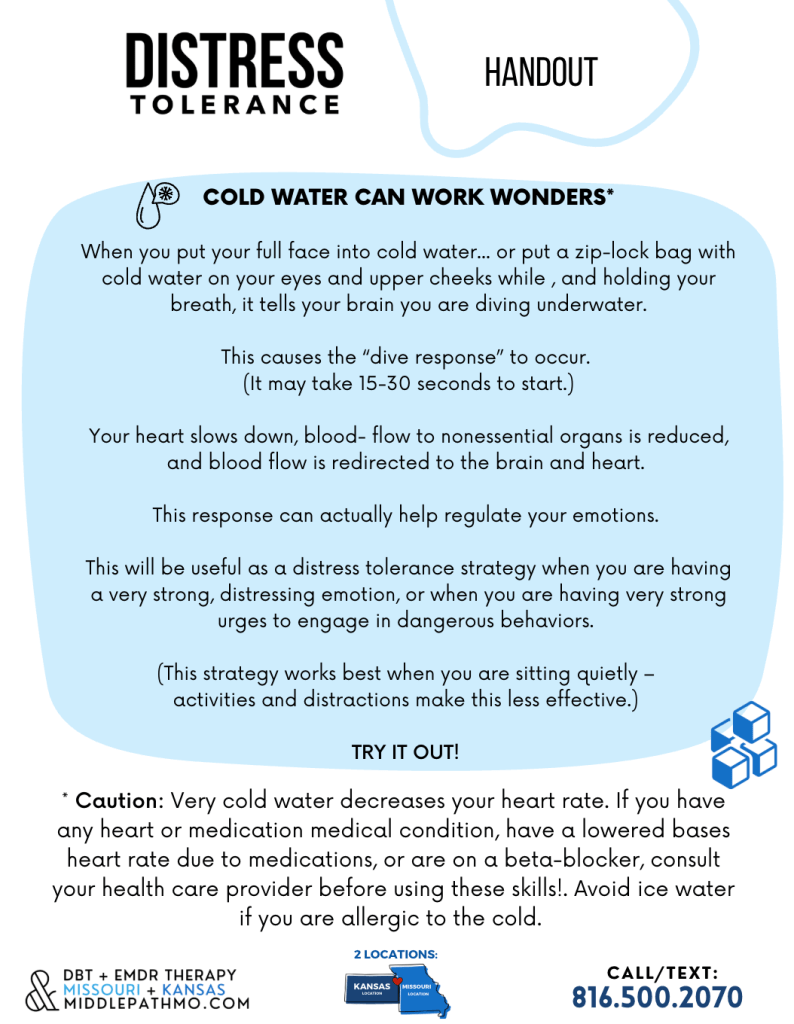
🧠 The Science Behind the Skill: Your Body’s Dive Response
When you immerse your full face in cold water (or apply a cold pack or zip-lock bag of ice water to your eyes and upper cheeks while holding your breath), it signals to your brain that you are diving underwater. This triggers a physiological reaction known as the dive response.
Here’s what happens:
- Your heart rate slows down.
- Blood flow to nonessential organs decreases.
- Blood is redirected to your brain and heart to conserve oxygen.
This natural response helps your body conserve energy and shift out of fight-or-flight mode. As a result, you may feel a sense of calm wash over you—like flipping a biological switch that tells your nervous system: “It’s safe now.”
❤️ Why It Works for Emotional Regulation
When we’re emotionally dysregulated—angry, panicked, dissociated, or on the verge of engaging in unsafe behaviors—our nervous system is in overdrive. The cold water skill disrupts that pattern quickly and physiologically.
Used as a Distress Tolerance strategy, this can:
- Help you ride the wave of intense emotion.
- Ground you in the present moment.
- Interrupt urges to self-harm or act impulsively.
This skill is especially useful when you’re having very strong, distressing emotions or urges to engage in dangerous behaviors. It’s not a fix-all, but it can give you the breathing room you need to move toward more skillful coping.
🧘 Pro tip: This works best when you’re sitting still and quiet. Movement and distractions can reduce its effectiveness.
⚠️ A Word of Caution
As with any skill, safety first. Very cold water slows your heart rate, so if you have:
- A heart condition,
- Are on medications like beta-blockers, or
- Have a history of lowered heart rate,
… please consult your healthcare provider before trying this technique. Also, avoid this skill if you’re allergic to the cold or prone to cold-related reactions.
✅ Try It Out!
Grab a bowl of cold water, hold your breath, dip your face in, and stay submerged for 15–30 seconds. If that’s too intense, use a cold compress or ice pack on your cheeks and eyes. Pay attention to how your body feels before, during, and after. You might be surprised at how quickly things shift.
📍 Need Support?
At Middle Path DBT & EMDR Therapy in Kansas and Missouri, we specialize in helping teens and adults manage intense emotions using evidence-based approaches like DBT and EMDR. Whether you’re dealing with Borderline Personality Disorder, Bipolar Disorder, or trauma-related challenges, you don’t have to go it alone.
📱 Call or Text: 816.500.2070
🌐 Email Us: Admin@middlepathmo.com
This is just one of the many DBT tools available to help you build a life worth living. Keep practicing—and remember, even the simplest tools can create powerful change.
 Middle Path Counseling MO