
Dialectical Behavior Therapy (DBT) is an evidence-based treatment that helps individuals manage intense emotions, develop coping skills, and improve relationships. One of the key tools used in DBT is Behavior Chain Analysis, a structured method for understanding problem behaviors and identifying ways to change them. This process is particularly useful for individuals struggling with self-destructive behaviors, emotional dysregulation, or interpersonal conflicts.
What is Behavior Chain Analysis?
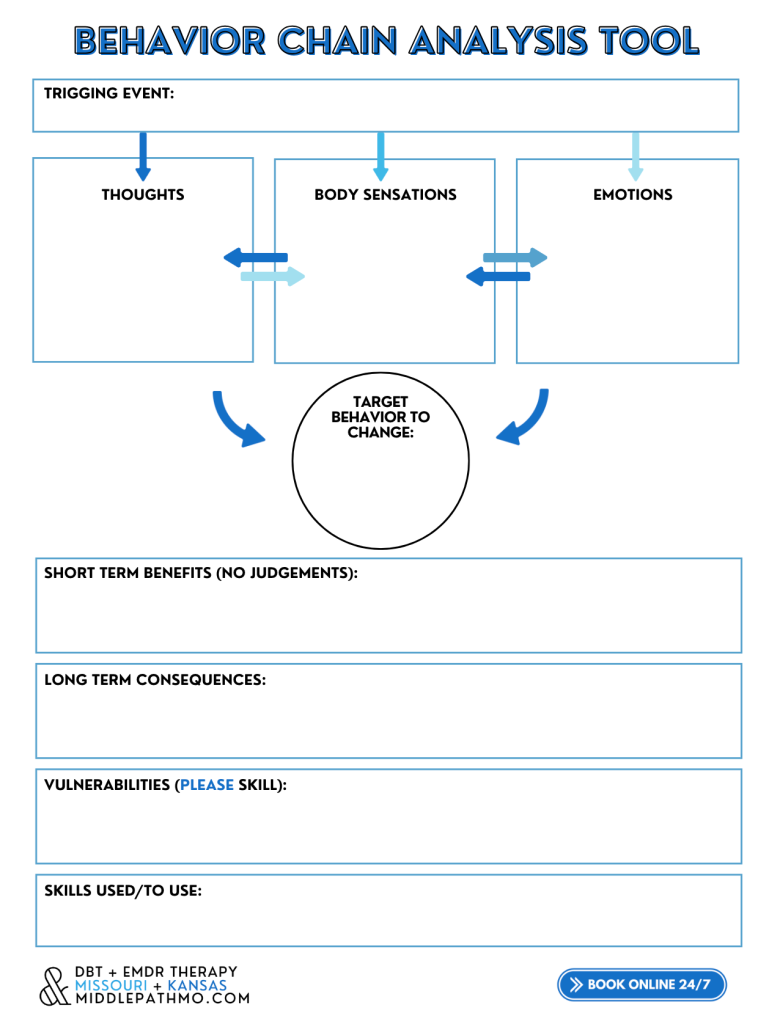
Behavior Chain Analysis (BCA) is a structured technique that helps individuals dissect their problem behaviors by identifying the sequence of events that led up to them. It allows individuals to recognize patterns, vulnerabilities, and triggers while also exploring alternative coping strategies. The goal of BCA is not to assign blame but to increase awareness and foster positive change.
Steps in a Behavior Chain Analysis
- Describe the Problem Behavior
- Clearly define the behavior you want to analyze. Be specific about what happened, where it occurred, and who was involved.
- Identify the Prompting Event
- What was the initial trigger that set the behavior in motion? This could be an external event (e.g., an argument, a stressful situation) or an internal experience (e.g., a painful emotion, a thought, or a physical sensation).
- Identify the Links in the Chain
- Break down the steps that led from the triggering event to the problem behavior. Consider thoughts, emotions, bodily sensations, and other behaviors that played a role in escalating the situation. Each link should logically connect to the next.
- Recognize Vulnerability Factors
- Consider what made you more susceptible to engaging in the behavior. Common vulnerability factors include lack of sleep, hunger, stress, past trauma, or emotional distress.
- Examine the Consequences
- Identify both the short-term and long-term consequences of the behavior. Did it provide temporary relief? Did it create additional problems? Understanding consequences can highlight why change is necessary.
- Identify Skillful Alternatives
- Explore alternative behaviors and coping strategies that could be used in similar situations in the future. This might include distress tolerance techniques, mindfulness, or assertive communication.
Why is Behavior Chain Analysis Important?
- Increases Self-Awareness: By breaking down behaviors, individuals gain a better understanding of their patterns and triggers.
- Encourages Accountability: It helps individuals take responsibility for their actions without self-judgment.
- Provides a Roadmap for Change: By identifying vulnerabilities and alternative coping strategies, individuals can develop more effective responses to distressing situations.
- Enhances Problem-Solving: The structured approach of BCA helps individuals think critically about their behavior and make informed choices.
Final Thoughts
Behavior Chain Analysis is a powerful DBT tool that fosters self-understanding and paves the way for meaningful behavioral change. While it can be challenging at first, practicing this technique with the guidance of a DBT therapist can lead to significant improvements in emotional regulation and decision-making.
If you or someone you know could benefit from DBT and Behavior Chain Analysis, our team is here to help. Reach out to learn more about our DBT services and how we can support you on your journey toward healing and growth.
 Middle Path Counseling MO